

Reefer Trailer

Reefer Trailer
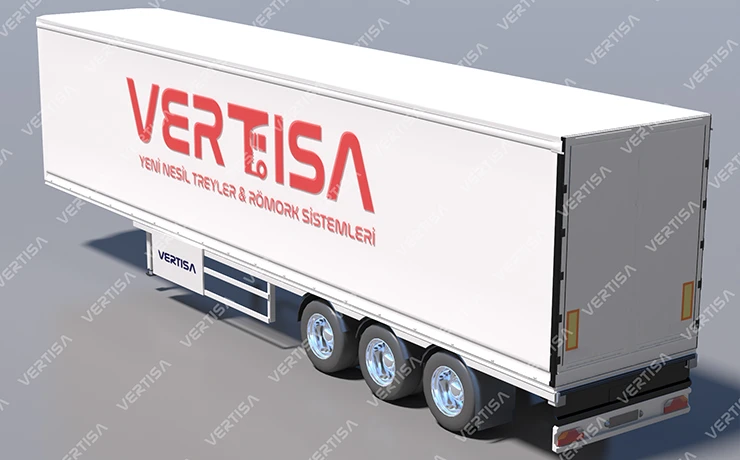
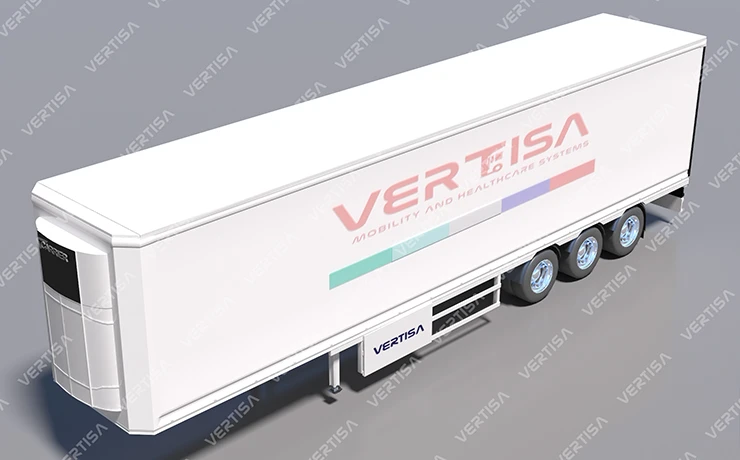
Reefer trailers are vehicles used to transport products or materials that need to be kept at a certain temperature.
Reefer trailer; It is also known by different names such as a refrigerated trailer, freezer trailer, bulkhead reefer trailer, and cooler trailer. The refer trailer, which has a special heat system so that the products do not deteriorate, stabilizes the heat, humidity, and airflow. The internal temperature can be adjusted between 12 C0 and -70 C0 according to the need. It is one of the most important assistants of logistics companies in the field of cold transportation. Vertisa Trailer designs and manufactures the reefer trailer by the needs.


- Catalog not yet loaded
| Panels | The sandwich system consists of inner and outer GRP (Glass Reinforced Polyester) layers with 42 kg/m³ density polyurethane material, reinforced at specific intervals. GRP is a glossy, weather-resistant material available in any color, does not require additional painting, and does not fade or yellow over time. |
| Floor | A sandwich system consisting of inner and outer GRP layers, water-resistant plywood in between, 42 kg/m³ polyurethane, and reinforced with kiln-dried beech wood. The final layer can be polyester, sandblasted, or aluminum, depending on preference. |
| Rear Door | Specially reinforced GRP polyurethane sandwich system. The doors can open 270 degrees and are available as double-wing or single-wing options. |
| Frame | The rear frame is made of 304-grade stainless steel. |
| Ventilation Covers | Located on the front panel and each rear door, equipped with stainless steel louvers. |
| Chassis | Manufactured from high-strength steel according to ISO standards, in an (I) profile shape, using an automatic submerged arc welding machine. Two chassis, crossbars, and cushions are connected to the outer sheet. |
| Axle | Each with a carrying capacity of 9 tons, featuring automatic brake adjusters. Three imported BPW-SAF or locally manufactured axles are used. |
| Air Suspension | Imported system with front axle lift to extend tire lifespan. |
| Tires | 6+1 tubeless tires, size 385/65R 22.5. |
| Mechanical Legs | Imported dual-speed mechanical legs with a load capacity of 24 tons. |
| Brakes | Imported dual-air line brake system. Equipped with an automatic load adjustment valve and emergency brake chambers. |
| Air System | This system uses polyamide brake pipes and fittings. The air suspension system ensures the required air supply for front axle lifting, braking circuits, and ABS-EBS via air tanks. |
| Brake System | Imported 4S/2M system in compliance with EU standards. |
| King-Pin | Flanged type with a 2-inch measurement. |
| Paint | The trailer chassis, once welded, undergoes sandblasting for cleaning before painting. After priming in the paint booth, the final coating is applied in the desired color and cured in an oven. |
| Electrical System | Compliant with European Community standards, 24V, including interior lighting, parking lights, brake lights, turn signals, side clearance lights, and a reflector system. |
| Standard Accessories | Lift-up bumper |
| 1 spare tire holder | |
| 1 food cabinet | |
| 1 toolbox | |
| Fiberglass mudguards | |
| Ladder | |
| Water tank | |
| Bicycle guard | |
| Optional Features | Locally manufactured axle |
| Disc brakes | |
| Fuel tank | |
| Local suspension (mechanical, air) | |
| Refrigeration unit |
| Technical Dimensions | |
| 5th Wheel Height | 1120 mm |
| Gooseneck Thickness | 10 mm |
| Axle Distance | 7700 mm |
| Overall Length | 13600 mm |
| Inner Length | 13385 mm |
| Vehicle Width | 2600 mm |
| Inner Width | 2460 mm |
| Inner Net Height | 2650 mm |
- Brochure not yet loaded
What is a Refrigerated Trailer?
A refrigerated trailer refers to a truck equipped with a cooling system and is a commonly used trailer model for high-tonnage freight transportation. It is also known by various names such as reefer trailer, refrigerated semi-trailer, and fridge trailer.
The most distinctive feature of a refrigerated trailer (reefer trailer) is its cooling system, which sets it apart from other trailer models. This type of trailer is specifically designed for temperature-controlled cargo transportation and is the most suitable solution for transporting perishable goods. Thanks to its advanced cooling system, it provides significant advantages for frozen goods transportation.
At Vertisa Next-Generation Trailer and Towing Systems, we manufacture high-quality refrigerated trailers that ensure optimal cooling and efficiency in temperature-sensitive logistics.
Trailer Production for Every Region of the World!
Contact Us For All Your Questions!
What Are the General Features of a Refrigerated Trailer?
A refrigerated trailer (reefer trailer) is manufactured with an insulated cargo compartment to maintain temperature control during transportation. The roof, floor, and doors of the refrigerated trailer are made from materials designed to prevent internal air from escaping and block external air from entering. It is equipped with a vapor compression and cooling mechanism, ensuring that perishable goods are transported under optimal conditions.
A reefer trailer can be customized based on the type, quantity, and specific requirements of the cargo, as well as customer preferences.
Due to its heat absorption system, a reefer trailer is also known as a refrigerated semi-trailer. One of its most important technical features is the ability to receive quick technical service whenever needed. The cooling system consists of flexible copper or steel pipes, which facilitate maintenance and enhance durability. Additionally, this system is designed to withstand vibrations and shocks that may occur during transportation, ensuring safe and efficient delivery of temperature-sensitive cargo.
Technical Specifications of a Refrigerated Trailer
A reefer trailer is manufactured with three axles and has a maximum load capacity of 27 tons as per registration standards.
The general dimensions of a refrigerated trailer are:
- Length: 13,600 mm
- Height: 2,650 mm
- Width: 2,450 mm
These dimensions can be adjusted based on specific customer requirements within standard regulations.
Thanks to its thermal insulation, the refrigerated trailer consumes low energy while transporting cold products in all climate conditions. It is equipped with a temperature absorption system that allows it to maintain cargo safety within a temperature range of -20°C to +12°C, preventing deterioration or damage to perishable goods.
At Vertisa Next-Generation Trailer and Towing Systems, we manufacture custom reefer trailer models tailored for both corporate and private sector needs with a professional approach and expert team.
For more details on refrigerated trailer manufacturing or to discuss sample project studies, please contact our specialized team at Vertisa Next-Generation Trailer and Towing Systems.
Usage Areas of Refrigerated Trailers
Thanks to its cooling system, a refrigerated trailer is the ideal trailer model for food transportation. This eco-friendly cooling system ensures that the transported products do not spoil and remain fresh for a longer period.
Products That Can Be Transported with Refrigerated Trailers:
- Frozen foods (red meat, poultry, vegetables, fruits, etc.)
- Citrus fruits (oranges, tangerines, lemons, etc.)
- Frozen bakery products
- Beverages that require temperature control
- Dry food products
- Canned or packaged foods
- Various medicines, serums, and medical supplies
The cooling system of the refrigerated trailer ensures that cold chain materials transported over long distances do not deteriorate or get affected by climate conditions. While it may look similar to a commercial refrigerator, a refrigerated trailer is much more technologically advanced and equipped for industrial-scale logistics.
The temperature inside the trailer can be adjusted based on the specific requirements of the cargo. Different products require different temperature ranges, which can be precisely maintained in refrigerated trailers. This flexible temperature adjustment system makes reefer trailers the top choice for cold food transportation.
Manufactured according to European standards, Vertisa Next-Generation Trailer and Towing Systems offers high-quality refrigerated trailers. For more detailed information about our refrigerated cooling systems, contact us today!
Frozen Meat Transportation with Refrigerated Trailers
A refrigerated trailer is primarily used for transporting perishable goods due to its adjustable temperature control system, which can be set between 18°C and -26°C.
In international transportation of poultry (white meat) and red meat, factors such as climatic conditions, product durability, and quality preservation are crucial. To meet these requirements, the interior of the reefer trailer is cooled to a maximum of -18°C.
With its automatic temperature control system, refrigerated trailers ensure that meat and meat products are transported safely and delivered without any quality issues.
Fruit and Vegetable Transportation with Refrigerated Trailers
With a refrigerated trailer, the interior temperature can be adjusted between 1°C and 10°C during the transportation of fruits and vegetables. This ensures that the freshness and nutritional value of the transported fruits and vegetables are preserved until delivery.
Frozen Bakery Product Transportation with Refrigerated Trailers
A refrigerated trailer is the most preferred trailer model for transporting frozen bakery products, which need to be stored at temperatures between -12°C and -18°C.
Thanks to its remotely controllable temperature regulation system, a refrigerated trailer ensures that the transported food maintains its quality, nutritional value, and integrity under optimal conditions.
Dry Food Transportation with Refrigerated Trailers
Another key application of refrigerated trailers in international trade is dry food transportation. These trailers are equipped with all the necessary features to prevent mold, spoilage, decay, or pest infestation under standard temperature conditions.
Whether bagged or packaged, refrigerated trailers are the most reliable trailer model for transporting dry food products safely and efficiently.
Transportation of Various Medicines and Medical Supplies with Refrigerated Trailers
A refrigerated trailer is the preferred trailer model for transporting medicines and medical supplies in the pharmaceutical and chemical industries, thanks to its high-quality insulation and power supply unit.
The adjustable temperature absorption system ensures that sensitive chemical materials and medicines remain unaffected by climatic conditions.
The insulated doors, made from high-quality materials used in reefer trailer manufacturing, help maintain the required temperature inside the trailer throughout the transportation process.
Refrigerated Trailer Manufacturing
In refrigerated trailer manufacturing, Vertisa Next-Generation Trailer and Towing Systems has proven itself with solution-oriented projects and European-standard domestic production. Manufactured with innovative technology in customized widths and lengths, refrigerated trailers are continuously enhanced through R&D efforts, making them more functional and efficient each day.
If desired, an automatic expansion feature can be integrated into refrigerated trailers. This allows the trailer to quickly reach the required capacity, enabling additional cargo transport within a short period.
Advantages of Choosing a Refrigerated Trailer
A refrigerated trailer is a large-capacity vehicle with thermal insulation, specifically designed for transporting temperature-sensitive products, food, and materials. Vertisa Next-Generation Trailer and Towing Systems continues the manufacturing of refrigerated trailers with ISO 9001-2000 certification. Additionally, all refrigerated trailers produced by Vertisa are certified with Type Approval Certificates 01, 02, 03, and 04.
- A refrigerated trailer has an instant cooling and heating system based on the characteristics of the cargo. This system minimizes waiting time during temperature changes inside the trailer.
- The thermostatic control panel used in refrigerated trailer manufacturing is designed for automatic operation but can also be configured for manual use upon request.
- Compared to other trailer models, a refrigerated trailer is manufactured to be lighter, allowing it to carry heavier loads while also reducing fuel consumption when traveling empty.
- Since an empty refrigerated trailer is lighter, it significantly reduces tire wear, extending the lifespan of the tires and lowering maintenance costs.
- The special polyester material used in refrigerated trailer manufacturing reflects sunlight, ensuring even heat distribution. This feature protects transported goods, food, or materials from external climatic conditions, maintaining their quality throughout transportation.
Refrigerated Trailer Prices
Refrigerated trailers are fully customized based on specific needs and are manufactured according to European and TSE standards. Their width and length may vary depending on the project requirements. Additionally, an automatic expansion feature can be integrated into the refrigerated trailer based on customer preferences.
As a result, refrigerated trailer prices are not fixed, as they depend on the features and specifications determined according to individual needs.
As one of the leading manufacturers in refrigerated trailer production, Vertisa Next-Generation Trailer and Towing Systems offers customized solutions. For detailed pricing information, please contact our dedicated team.
Vertisa Next-Generation Trailer and Towing Systems is one of the leading manufacturers in lowbed semi-trailer production, continuously incorporating the latest technological advancements into its manufacturing processes. The company has achieved European standards in lowbed semi-trailer production, ensuring the most comfortable and safest working environment in transportation.
One of the key advantages of a lowbed semi-trailer is its extendable chassis, which provides greater load-carrying capacity for its users.
With its expert team and years of experience, Vertisa Next-Generation Trailer and Towing Systems continues to develop lowbed semi-trailers through extensive R&D efforts. These advancements aim to provide maximum solutions to logistics transportation challenges, ensuring continuous innovation in semi-trailer manufacturing.


